About Simon

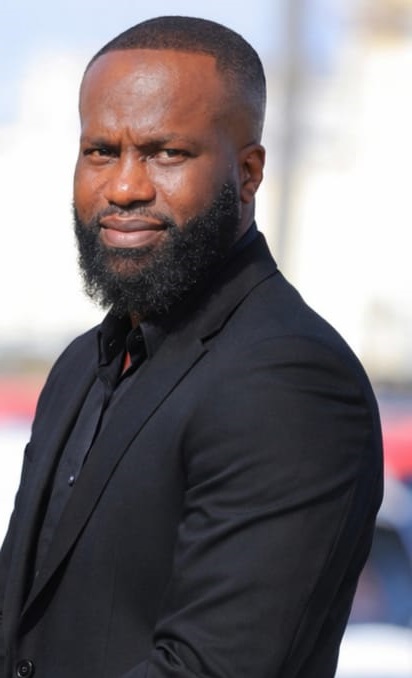
For over fifteen years, my professional life has existed at the intersection of education, creativity, and child development—a journey that has evolved from classroom teaching to founding my own learning initiatives. I am an educator and founder dedicated to reshaping how young learners engage with knowledge, blending the structure of formal pedagogy with the freedom of artistic expression.
My career began in language education, which led me to earn my TESOL certification. Teaching English to speakers of other languages taught me the profound importance of communication and the patience required to build bridges of understanding. However, I soon realized that language acquisition does not happen in a vacuum; it is deeply tied to a child’s cognitive and emotional state. This insight drove me to pursue a diploma in child psychology, equipping me with the tools to understand not just how children learn, but why they sometimes struggle, and how they truly thrive.
Armed with this dual perspective, I spent over a decade and a half in diverse educational settings, working with children from various cultural and linguistic backgrounds. I discovered that my most effective moments as an educator came not from rigid lesson plans, but from moments of creative breakthrough—when a shy child found their voice through a character in a story, or when a disruptive student found focus through a hands-on art project. This realization led me to further my studies in theater and media arts, disciplines that have since become central to my teaching philosophy.
Today, as the founder of my own educational programs, I design what I call “structured creative courses.” These are learning experiences built on a simple but powerful philosophy: that true confidence is born when creativity is given a safe framework in which to operate. I believe that children do not need chaos to be creative, nor do they need rigidity to be disciplined. They need a structured environment that feels secure enough to take risks, and creative enough to make those risks exciting.
In my courses, a child might learn the grammar of a new language in the morning and then step onto a “stage”—whether literal or metaphorical—to perform that language in a skit. They might explore the principles of storytelling through media arts, or process their emotions through guided theatrical play. The child psychology informs every interaction; the TESOL background ensures language is accessible; the arts keep the spirit engaged. It is a holistic approach that builds not just academic skills, but life skills: empathy, resilience, and the confidence to express oneself authentically.
On a practical note, I hold a valid work permit and maintain local residency, ensuring that I am fully available and compliant to dedicate my time to the students and families I serve. I am not just passing through; I am invested in this community and in the long-term growth of the children here.
Ultimately, my life’s work is about proving that structure and creativity are not opposites, but partners. When we give young learners the tools to explore and the framework to create, we give them the greatest gift of all: the confidence to grow into who they are meant to be.